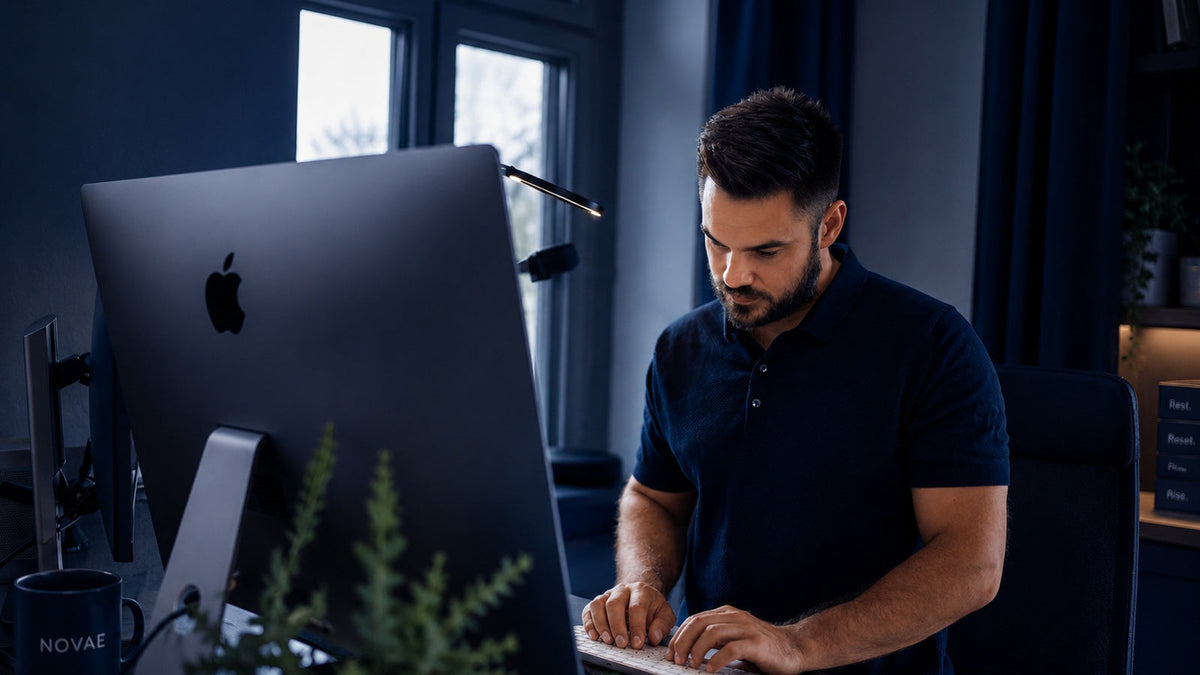
High performers, professionals, entrepreneurs, and small business owners, anyone juggling multiple priorities are no strangers to overwhelm and procrastination.
Busy minds, racing thoughts, and constant distractions make it hard to act, make decisions, and follow through. The problem isn’t willpower — it’s your brain running on low sleep and high stimulation.
Even highly capable and driven people often feel stuck. Tasks pile up, priorities blur, and every decision feels heavier than it should.
Why procrastination isn’t laziness
Procrastination is rarely about discipline. Most of the time, it’s mental overload.
When your mind is fatigued:
Simple decisions feel difficult
Tasks seem larger than they are
Your brain defaults to “reactive mode” instead of “strategic mode”
The result? You spend more time thinking about what you should do than actually doing it.
The sleep–productivity connection
Sleep isn’t downtime — it’s recovery for your brain.
When you sleep well:
Racing thoughts slow down
Mental clarity returns
Priorities feel manageable
Motivation naturally increases
Even small improvements in nightly rest can dramatically reduce procrastination.
A simple tool like a Novae Sleep Mask can help by creating complete darkness, reducing sensory input, and signaling your nervous system to switch off — allowing your brain to fully reset.
Practical ways to stop procrastinating tonight
Brain dump before bed
Write down lingering tasks, decisions, and worries. Free your mind from replay loops so you can rest.
Create a consistent wind-down
Even 10–15 minutes of low-light, calm activity trains your brain to disengage.
Block distractions
Remove visual stimulation (phones, lights) and anything that keeps your brain alert.
Prioritize the top 3 tasks for tomorrow
Before bed, write down the three most important tasks you need to complete tomorrow. This keeps you focused on what truly matters and prevents distraction from less critical noise.
Use a Pomodoro timer
Break your work into focused intervals (e.g., 25 minutes on, 5 minutes off). During each 25-minute session, do not reply to emails or answer calls — focus solely on completing one of your three priority tasks. This helps you maintain momentum and avoid reactive work.
Why this matters
Procrastination isn’t a character flaw — it’s a signal that your brain is overloaded and under-rested.
By improving nightly rest, calming the mind, and creating clear cues for sleep, you’ll find that tasks get done faster, decisions feel easier, and mental friction melts away.
A rested mind isn’t just more productive — it’s more decisive, focused, and confident.
